These Fashion Mistakes Can Add 10 Pounds to Your Look

Small styling choices can quietly change how your outfit looks—and not always in your favor. Often, it’s not about body type or trends, but how pieces fit, layer, and balance together. When a few details are off, even a great outfit can feel heavier or less polished. The good news? These mistakes are easy to fix once you know what to look for. With a few smart adjustments, you can instantly look more streamlined and confident without buying anything new.
The Psychology of Dressing Slimmer
What you wear doesn’t just affect how others see you—it shapes how you see yourself. Clothes that fit well and feel flattering can instantly boost confidence and comfort. When you feel good in your outfit, your posture improves, and your movements feel more natural. This quiet confidence changes how you carry yourself throughout the day. Dressing slimmer is often less about illusion and more about choosing pieces that help you feel your best.
How Clothing Shapes the Way You See Yourself
Have you ever noticed how much better you feel in clothes that fit just right? That’s because clothing affects more than your appearance—it influences your mindset. When an outfit flatters your shape, it creates a sense of balance and ease. You naturally feel more confident and comfortable in your own skin. That inner confidence shows in your posture, movement, and attitude. Simply choosing the right pieces can positively change how you see and carry yourself every day.
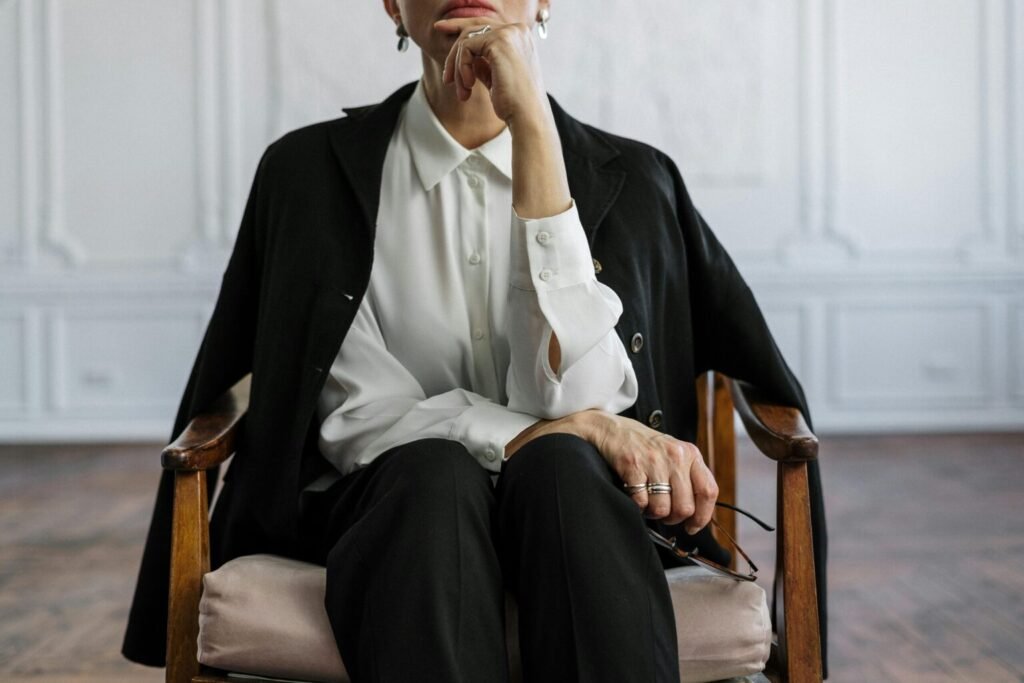
Confidence Boosters: Why Feeling Good in Your Clothes Makes You Look Slimmer
Confidence has a powerful effect on how you look. When you feel good in your clothes, it shows in your posture, movement, and overall presence. You stand taller, move more naturally, and appear more relaxed. That ease can instantly make your body look more balanced and slimmer. Outfits you love bring out a calm, confident energy. And often, that confidence is what makes any look truly flattering.
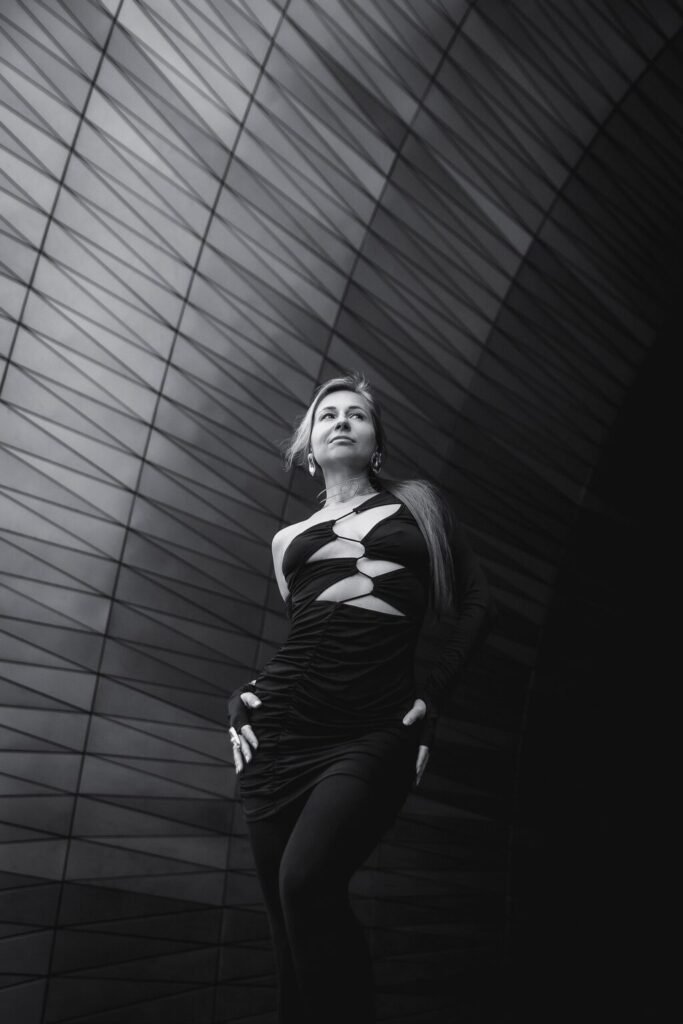
1. Picking a Shirt Without Buttons
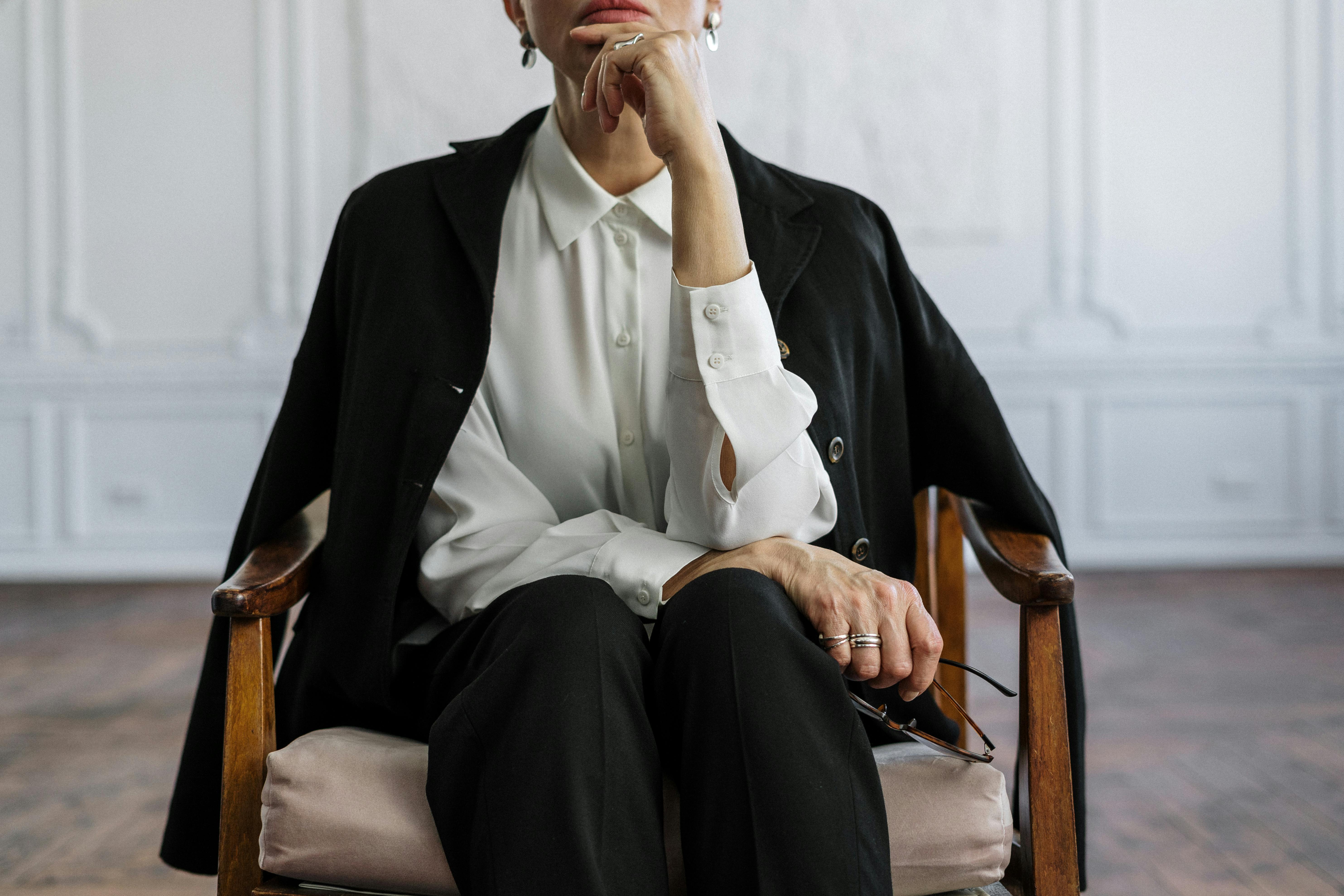
It’s easy to overlook how much a shirt affects your overall look. The wrong style can make your body appear wider or your outfit feel unfinished. Fit, fabric, and structure matter more than most people think. Button-down shirts naturally add shape and clean lines to your frame. They help balance proportions and look more polished without effort. With the right buttoned shirt, your outfit instantly feels slimmer and more put-together.
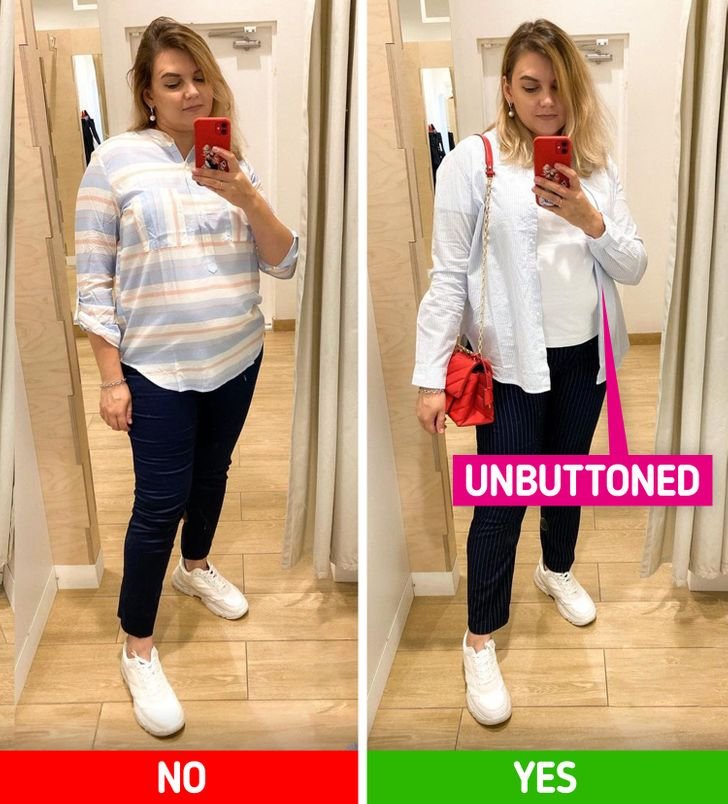
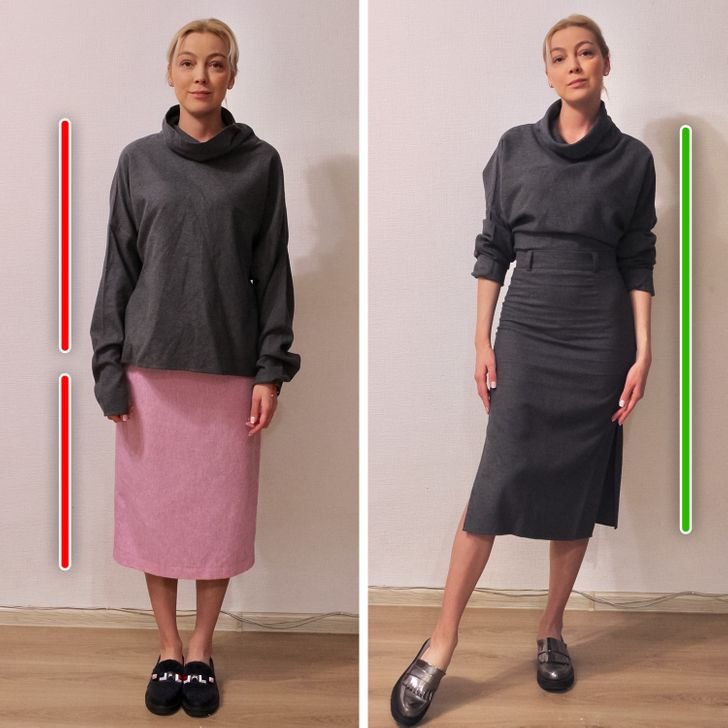
2. Wearing a Loose Sweater with a Skirt
Loose sweaters can feel cozy and look trendy, but they often hide your natural shape. When there’s no structure, the outfit can appear boxy and make your legs look shorter. This is especially true when the sweater falls past the hips. A simple fix is adding a belt at the waist. It instantly creates definition and balance. With that small change, your outfit looks more flattering, longer, and well-styled.
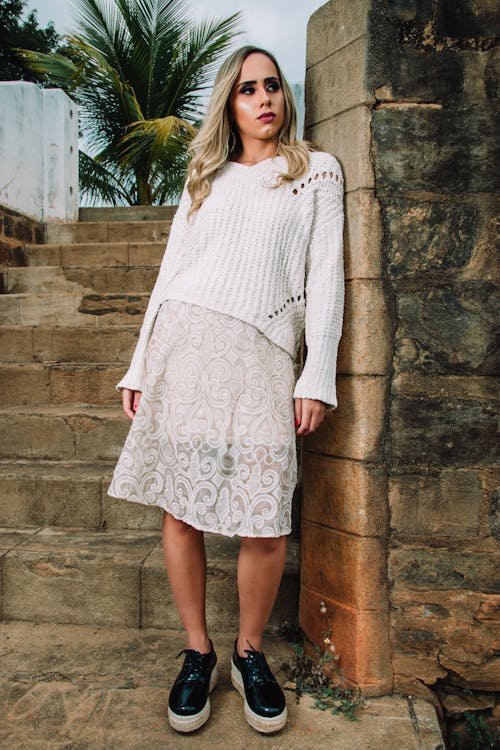
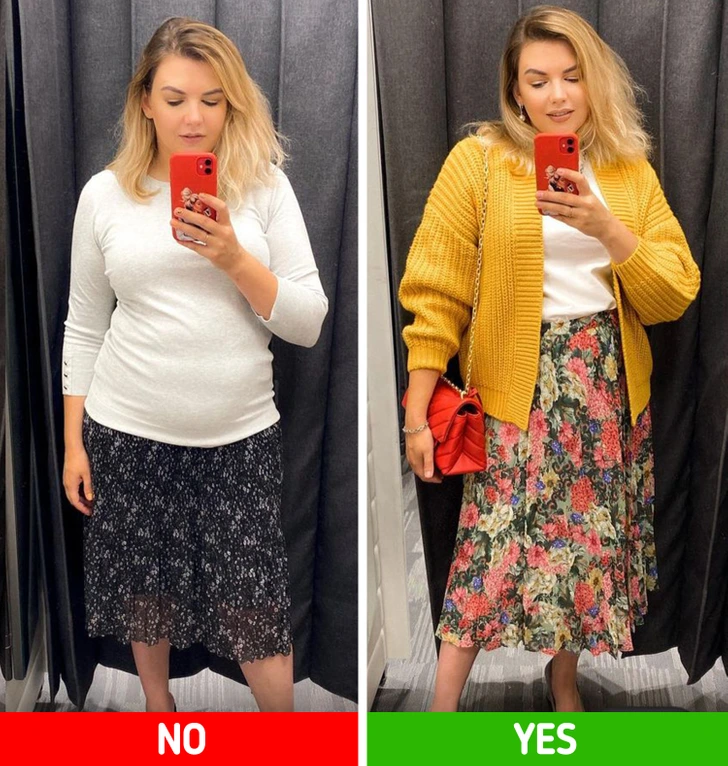
3. Pulling Down Your Top to Hide Your Belly
Pulling your top down too far might feel safe, but it can actually work against you. When a long shirt cuts across your hips—especially with contrasting bottoms—it can shorten your legs and widen your middle. Instead of hiding your shape, it breaks up your outfit. A simple half-tuck or front tuck instantly creates better proportions. Adding an open cardigan or jacket also helps lengthen your frame. Small styling tweaks like these make your look feel cleaner and more flattering.
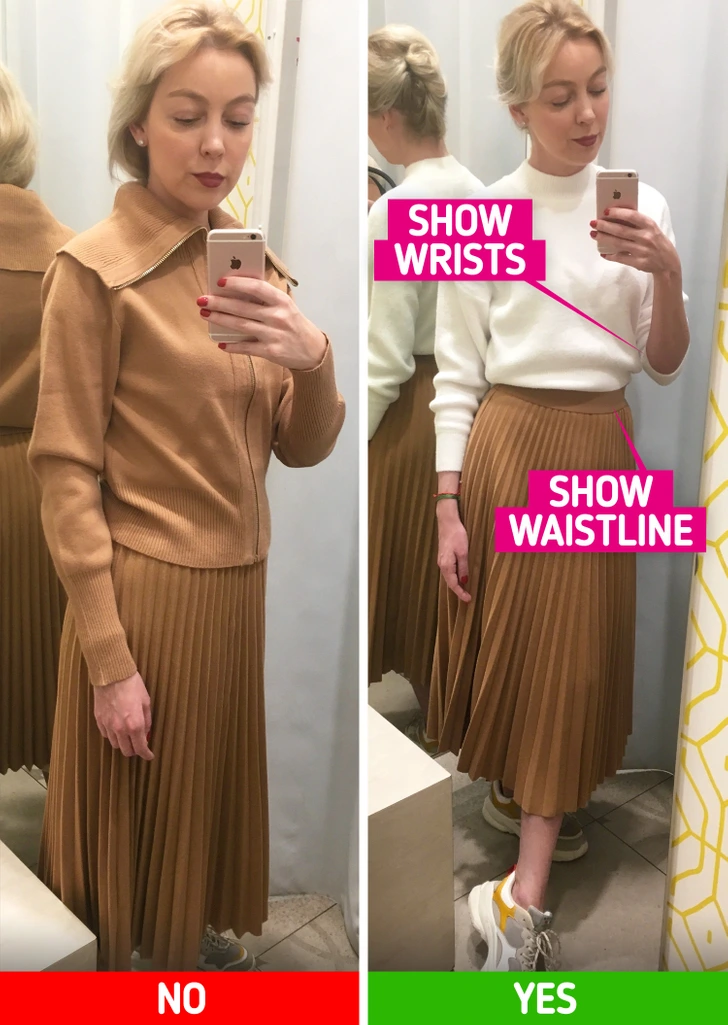
4. Not Showing Your Slimmer Areas
When you’re feeling unsure, it’s easy to hide behind loose, oversized clothes. But covering everything often makes your outfit look heavier than it needs to be. Showing small areas like your wrists, waist, or neckline helps create balance and natural shape. These details draw the eye to lighter, slimmer points of your body. You don’t have to reveal a lot—just a little skin goes a long way. It’s an easy trick that instantly makes outfits feel softer and more flattering.
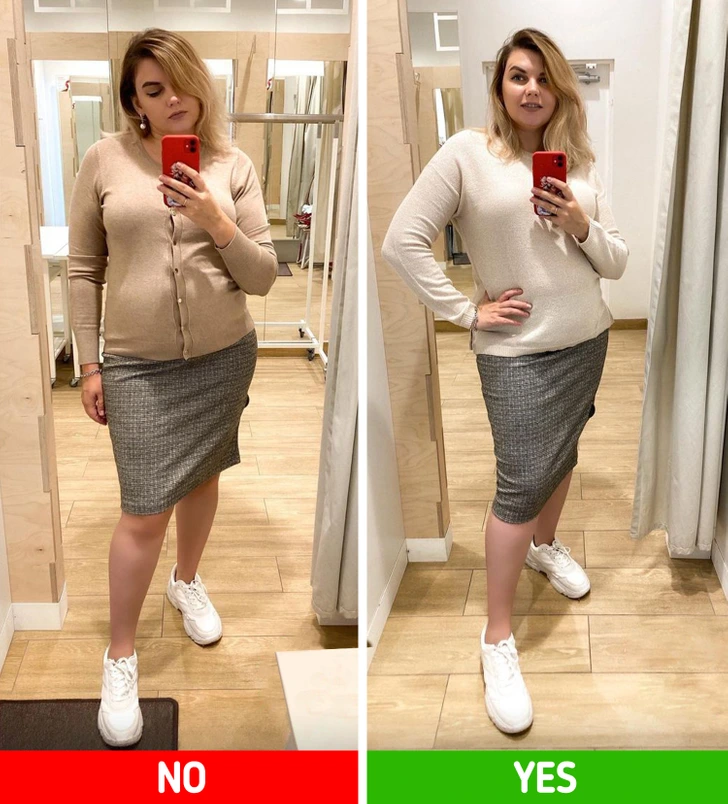
5. Using Button-Down Skinny Jersey Sweaters
Button-down jersey sweaters are comfy, but when they’re too fitted, they can cling in all the wrong places. This often draws extra attention to the shoulders or waist and throws off balance. A better choice is a relaxed, open-front knit that drapes softly over the body. Longer styles that fall below the hips help smooth the overall look. Open or waterfall cardigans create a clean vertical line that feels lighter and slimmer. Neutral or darker shades make them even more flattering and easy to style.
6. Being Afraid of Monochromatic Looks
Wearing one color from head to toe can actually make your outfit look cleaner and more put-together. A single shade creates a smooth visual line that helps you appear taller and more streamlined. When all the focus is on one bold piece, it can draw attention to areas you may want to downplay. Tucking in your top or choosing high-waisted bottoms helps keep proportions balanced. To avoid looking flat, mix fabrics like knits, denim, or leather in the same color. Simple accessories can add interest without breaking the flow.
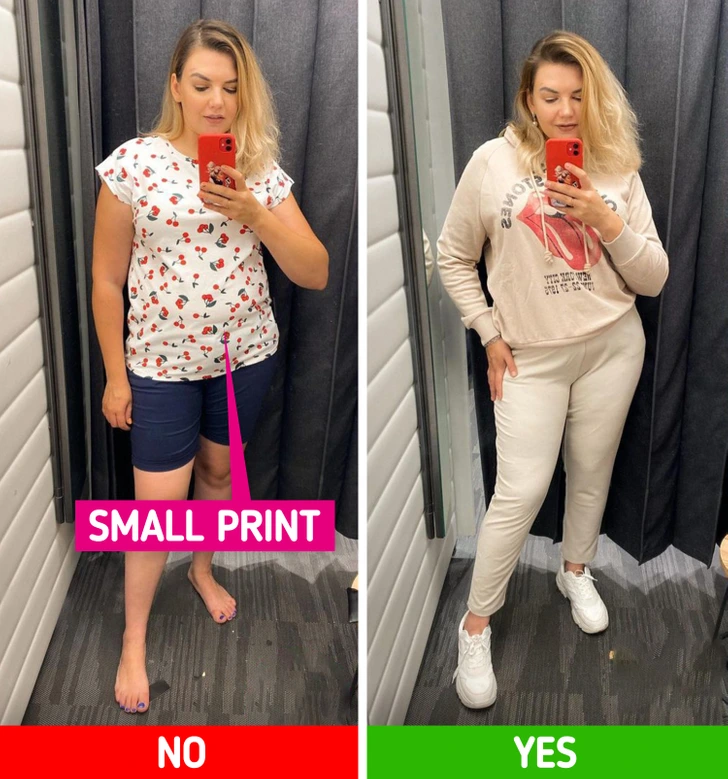
7. Wearing Shorts That Are Too Short
Very short or tight shorts might feel like a quick way to look slimmer, but they often have the opposite effect. They can draw attention to areas you might prefer to downplay and feel less comfortable. A better option is relaxed-fit shorts or track pants that drape softly over your body. Mid-thigh lengths work especially well, creating a balanced, flattering silhouette. Stick to solid colors or simple patterns to keep the look clean and avoid breaking up the flow of your outfit.
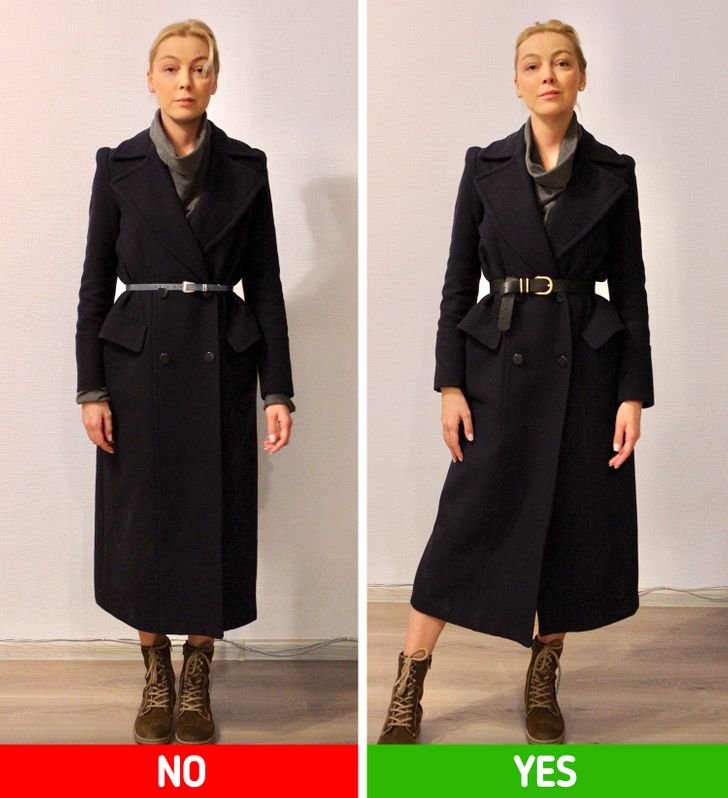
8. Wearing a Belt That’s Too Thin or Bright
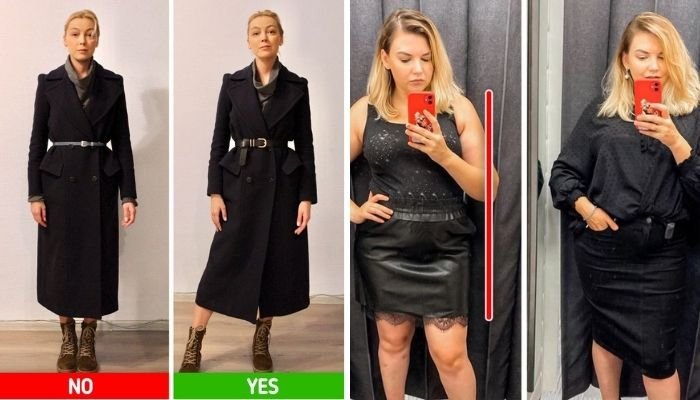
Light or bright belts can look fun, but if they contrast too much with your outfit, they can draw unwanted attention to your waist. To keep your look balanced, choose a belt that blends with your clothing’s color palette. Belt width matters too—thin belts can get lost under thick fabrics, while wider belts add structure and define your waist. Wide belts work especially well with coats, dresses, and high-waisted pants, creating a polished, flattering silhouette without extra effort.
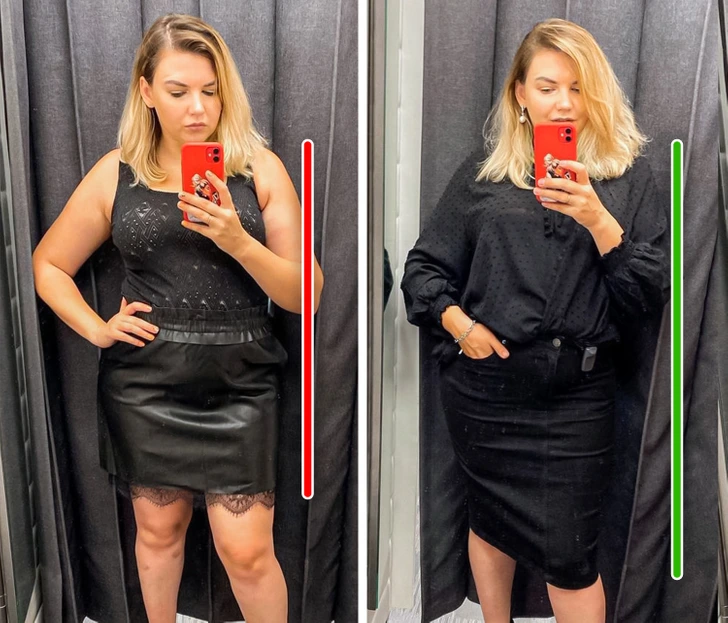
9. Picking Short and Tight Clothes All the Time
Wearing shorts or tight pieces constantly doesn’t always make your legs look longer. Very short skirts or fitted bottoms can create harsh lines that shorten your silhouette. A pencil skirt or tailored piece is often a better option, as it follows your body’s natural shape and creates a smooth, elongating line. For the most flattering effect, aim for lengths just above or just below the knee. This balances your outfit and highlights the slimmest part of your legs.
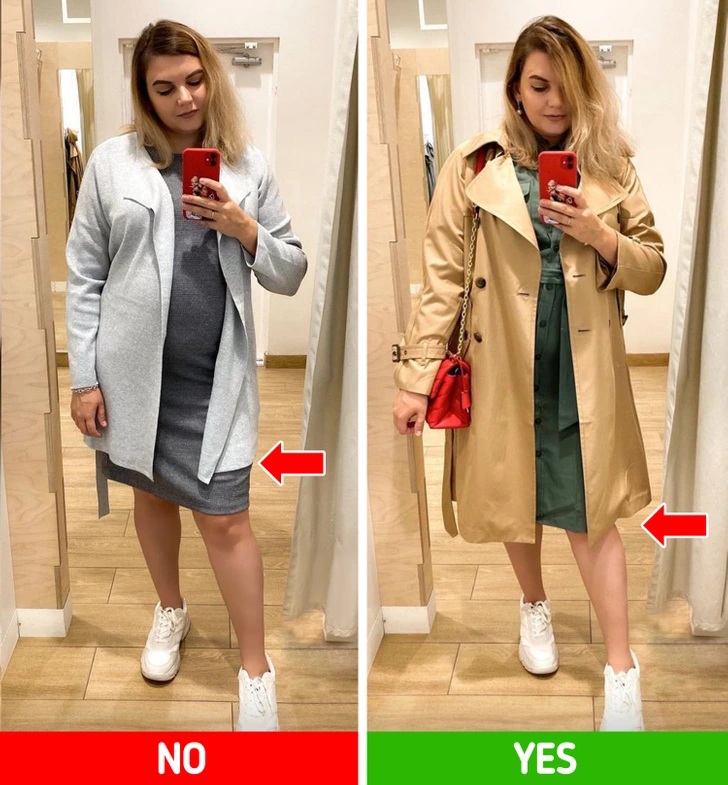
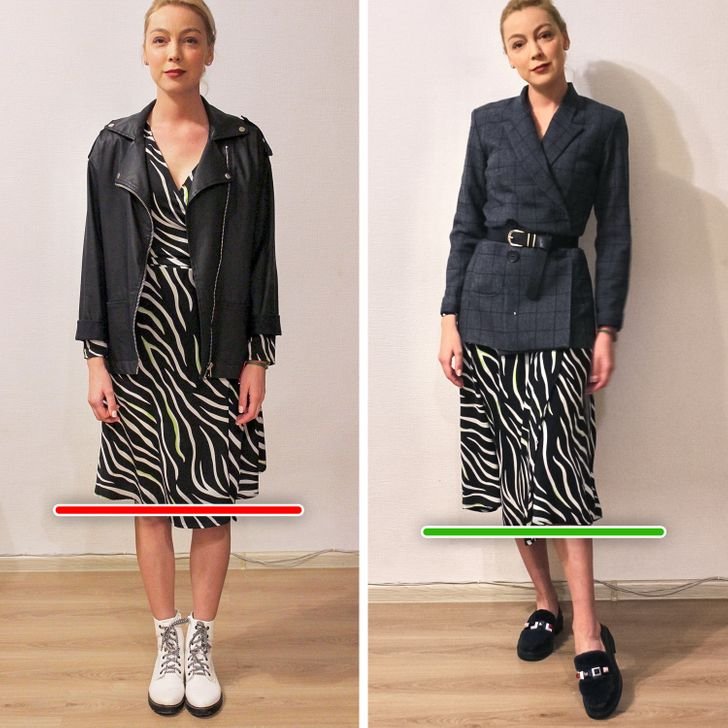
10. Wearing a Skirt or Dress Longer Than Your Coat
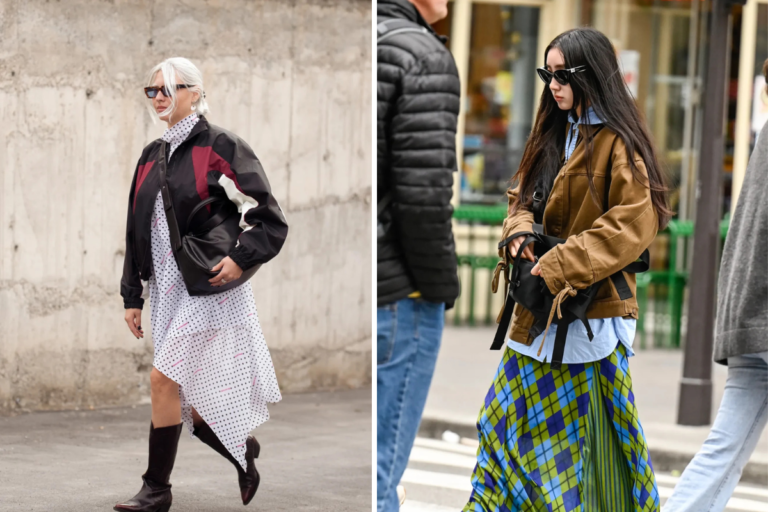
When layering, length matters. A short jacket over a longer skirt—especially in a contrasting color—can break up your outfit and make your body look wider. To create a smooth, balanced look, choose outerwear that’s the same length as your skirt or even longer. This elongates your silhouette and keeps proportions flattering. If you prefer a shorter jacket, pair it with high-waisted skirts or pants to maintain a clean line and highlight your shape.
11. Picking the Wrong Skirt Length
The length of your skirt or dress can completely change your outfit’s balance. Styles that fall too far below the knee may feel heavy and hide your natural shape. A length just above or just below the knee works best for most people, highlighting the slimmest part of your legs. A-line skirts are flattering, but if they’re too long, they can shorten your frame. Choosing a slightly shorter A-line style keeps your look polished, balanced, and comfortable.
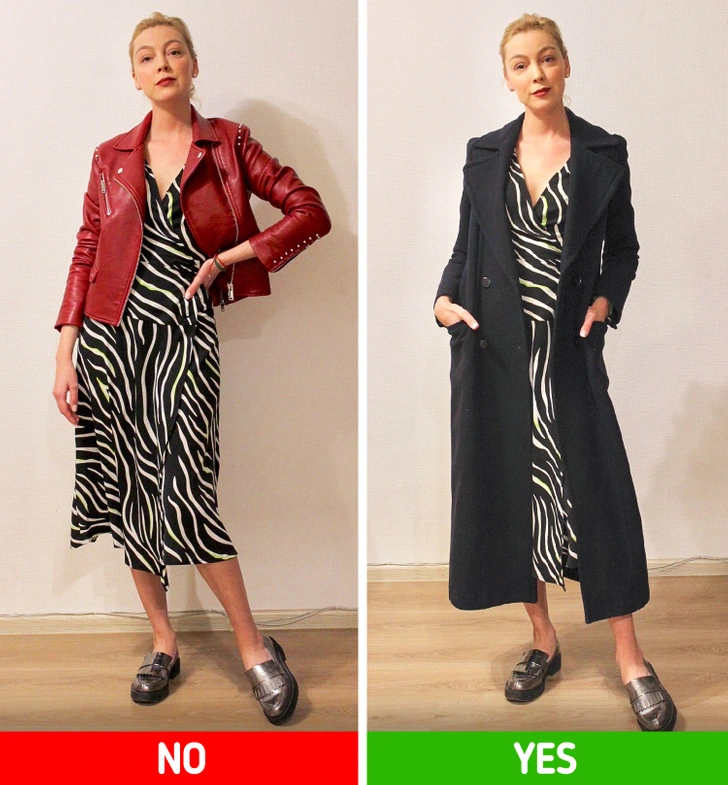
12. Forgetting About Vertical Lines
The way your jacket falls can change how your body looks. Jackets that hit around mid-thigh or just below the hips create longer, more streamlined lines. Wearing your jacket open enhances this effect, forming a smooth vertical line that makes your outfit feel lighter andmore balanced. Avoid sharp horizontal lines at the waist, which can make your shape appear boxy. Soft tailoring, gentle drapes, or flowing shapes keep your look flattering and effortless.
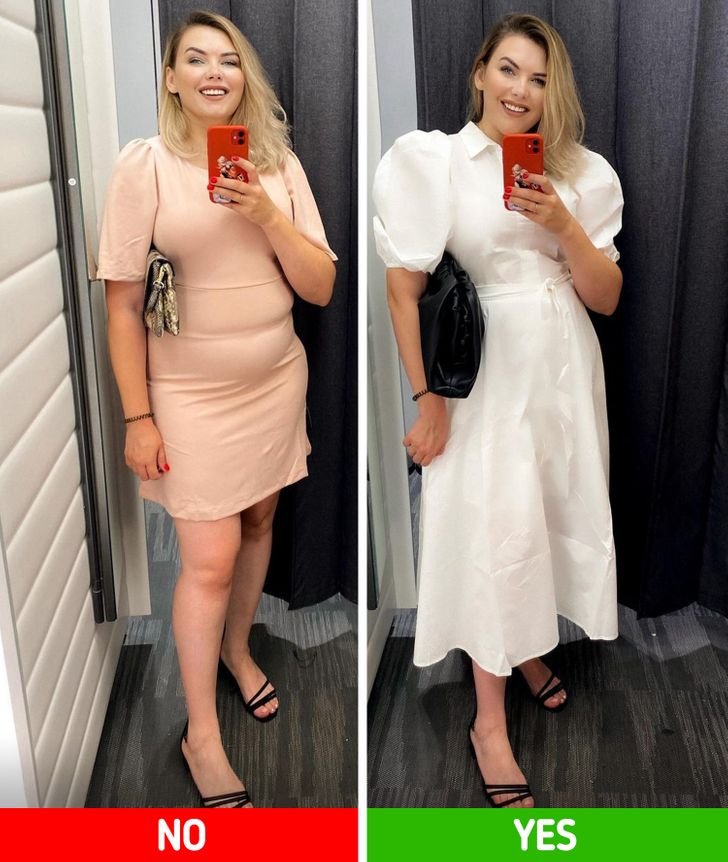
13. Wearing Dresses That Are Too Tight
Tight dresses may seem like they hide your belly, but they often do the opposite. Clothes that cling can draw attention to areas you’d rather downplay. Looser styles, like A-line or relaxed dresses, move with your body and feel more comfortable. Defining your waist with a belt, empire waist, or natural shaping adds curves and balance. Even lighter colors, including white, can look flattering when the fit is right. The key is combining comfort, shape, and proportion for a polished look.
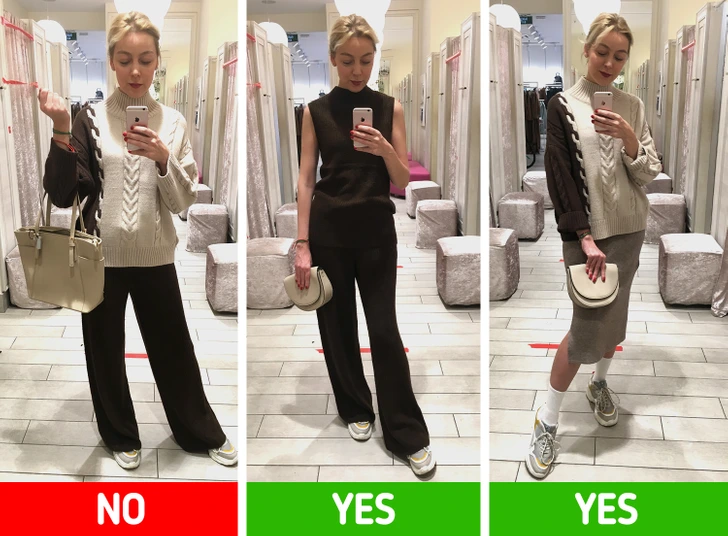
14. Using Too Many Oversized Pieces at Once
Wearing multiple oversized or long items can make your body look bigger than it is. Baggy clothes often hide your natural shape and create a boxy silhouette. Choosing pieces that fit well highlights your curves and keeps your outfit looking polished. Accessories matter too—smaller bags help balance your look and prevent your upper half from feeling heavy. Showing a bit of wrist with shorter sleeves adds softness and makes your arms appear lighter and more elegant.
15. Prioritizing Skinny Jeans
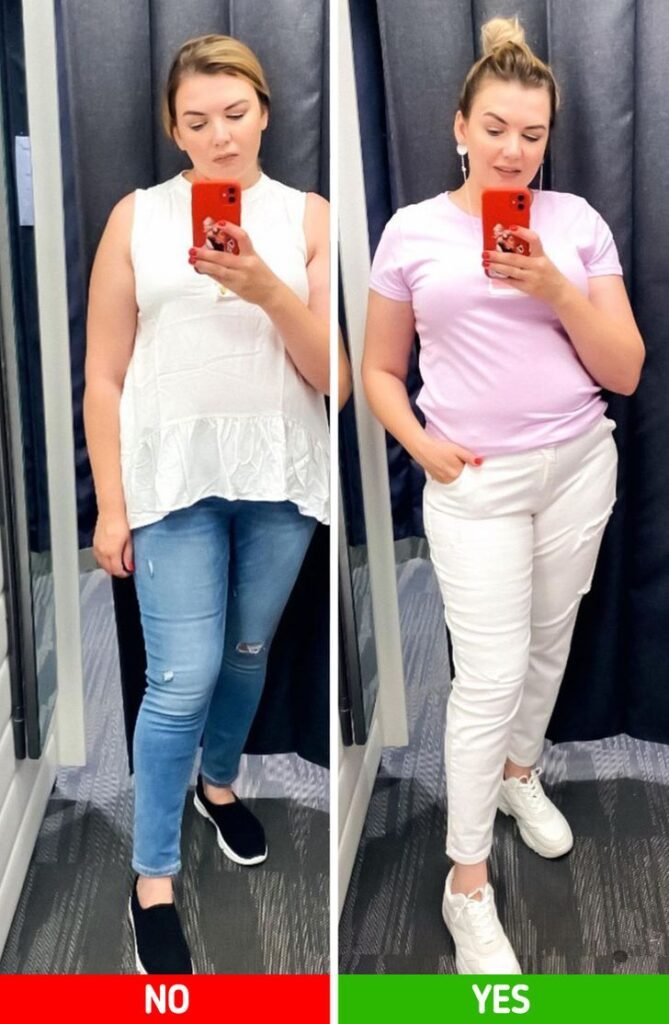
Very tight skinny jeans can draw attention to areas you might prefer to soften, especially if you have fuller legs. Relaxed styles, like straight-leg or bootcut jeans, are often more flattering and create a balanced, comfortable look. Showing a bit of your foot can help make legs appear longer and more streamlined. Keep your shoes simple and coordinated with your outfit—neutral tones work best to maintain a clean, polished appearance. Choosing the right fit makes a big difference in both comfort and style.
Final Thoughts
Small styling choices can make a big difference in how your outfits look and how you feel. Focusing on fit, proportion, and details like waist definition or vertical lines can instantly create a more balanced, flattering silhouette. Remember, confidence is key—when you feel good in your clothes, it naturally shows and enhances your overall appearance. Simple adjustments, thoughtful layering, and the right fabrics can help you look slimmer and more polished without overcomplicating your wardrobe.